Friday, July 13, 2018

Teaching in Malaysia: Round 1

As part of our #AgEd2Malaysia journey, all members of our team will be tasked with providing classroom instruction to Malaysian classrooms. At first, this task can seem daunting, but we will be paired with students from the Universiti Teknologi Malaysia who are fluent in Malay and can assist with any translation.

The first topic of teaching was aquaponics. Since Malaysia does not have large amounts of land to grow vegetables and raise fish for protein, aquaponics is a current topic to increase agricultural outreach in urban areas. My teaching team consisted of Kristi Mensen, a student-teacher candidate from Iowa State University, and Ain & Suhana from UTM.

Our goals for the lesson included:


  • Introduce the definition of aquaponics system
  • Describe the purpose of a aquaponics system
  • Explain the 6 components of a aquaponics system
  • Construct a simple aquaponics system using recycled materials
Our UTM colleagues started the lesson (in Malay) and walked students through the opening routine of class (students stand to greet the teacher and exchange greetings) and instructed students to find the definition and purpose of aquaponics in the textbook. Fun fact--Malaysian schools are on a national curriculum (even for agriculture), so each school in the country has the same textbook. From a teacher's perspective, this is a great system because regardless of which school you will be placed to teach in, the curriculum is identical. However, this may not meet the local needs of the community in which you teach.

I was responsible for guiding students through an inquiry-based activity to brainstorm what the function and purpose of each component of an aquaponics system (Fish, Plant, Air Stone, Air Tube, Pump, and Small Plastic Pot). I provided instructions in English, then my Malaysian counterparts asked students if they had questions (in Malay). After 5 minutes of brainstorming, I asked each group to share their answers. I was originally worried that they would be reluctant to share, but each group confidently held up their poster and provided their answers to the class.

Finally, Kristi led the class through a demonstration on how to build a simple aquaponics system using a plastic bottle, shower loofa, and small plastic pots. For her first time teaching a group of students (ever), she did a phenomenal job and really connected with the class.

At the end of the class, we surprised the students with a goldfish for their completed aquaponics system and the entire class of students swarmed around the front desk to watch as Kristi put a fish in their system. Group photos and selfies quickly ensued and just as quickly as we started teaching, the lesson had come to a close. 
Overall, I didn't really know how the lesson would be received by the students, but our group was engaged, asked on-task questions, and smiled frequently during the lesson. We have 2 more teaching opportunities where we will be paired with a new team to plan a new lesson. 

Cheers!
~Rom

Thursday, July 12, 2018

Pekan Nanas: Our Visit to Pineapple Town!

You would have thought we were in Hawaii yesterday as we made a much-anticipated visit to a Pineapple Farm! Our Malaysian counterparts thought it was so funny that we were excited to visit a pineapple farm until they learned that the only state that grows pineapples in the United States is Hawaii. Nonetheless, energy was high as we drove through a palm plantation to reach the Ministry of Agriculture's Pineapple Research and Development farm of 300 acres.

As we stepped off the bus, we received some awesome information that would help set the stage for our visit. The purpose of this farm is to produce "seeds" that are sold to farmers (more on a "seed" later). Additionally, this farm works with different varieties of pineapples from neighboring nations to determine which pineapples can be grown successfully in Malaysia that meet the strict demands for the export market (again, more on that story later). When planting pineapples, the planting density is 15,000-17,000 pineapples per acre.

Pineapple "seeds" ready to be
removed and sold to farmers
for $0.50 each
We started our tour by viewing a pineapple patch that had just been burned. After a crop has been harvested, the method of preparing a field for replanting is by burning the remaining plant material. We asked about any mechanical methods of removal (plowing, tilling, etc) to prepare the field and quickly learned that the soil for growing pineapples is peat, a very soft silt (I had never seen peat before, but while walking on the fields, it felt like a squishy rug). Needless to say, equipment would not be practical, so this is a very labor-intensive planting and harvesting process. The soil is also very acidic (3.75-4.5) and no soil amendments are needed to raise/lower the pH--we are told the pineapples love acidic soils.

Demonstration of how crowns
are quartered. All by hand.
Our tour continued past fields of pineapples in various stages of development, but our next stop was to view the seed development process. The pineapples grown for seed development have their crowns removed, and trimmed down to a 3-4 inch piece. This piece is then "quartered" to expose the inner portion of the crown that has plant cells that will continue to develop once planted. These quarters are planted and allowed to grow for 4 months. Once the growing crown is 4 months old, it is considered a "seed" that can be sold to local pineapple farmers. I asked the question, "Can a farmer retain the crowns from their own pineapple crop to create next year's crop?" (Essentially keeping seeds for themselves). I asked this question to determine if the pineapple genetics and seed development process was the property of the seed breeder like it is in the United States. I was told farmers can keep their crowns to grow their own seeds, but it is management decision depending upon available labor.

We learned the following quick facts while walking to the pineapple variety demonstration area.

So many pineapple statues in Pekan
Nanas (Pineapple Town!)
  • Once a pineapple seed is planted, it takes 14-16 months to harvest a pineapple (remember the seed was 4 months old)
  • Pineapples can go without water for 3 months
  • Once a pineapple has created a fruit, you can remove the "suckers" and replant them to grow a new pineapple plant (again, a management decision)
  • For export to the United States, the crown of the pineapple can only be 10 inches tall.
    • Interesting Fact: The main reason that pesticides are applied to pineapples are to keep the crowns in perfect condition for the export market. 
    • We were told that if the United States and other countries would change their policies, nearly no pesticides would be needed in pineapple production (talk about irony)
The final leg of the journey was a guided tour of the various varieties of pineapples. Additionally, there are ornamental pineapple plants as well (who knew?)
Several varieties of pineapples identified with the variety and
country of origin

Example of an ornamental pineapple!

Pineapple is utilized to create numerous products in Malaysia.
Anything from hand cream to drinkable juice to shampoo!


Wednesday, July 11, 2018

Student Agriculture Projects in Malaysian Secondary Schools: Day 3

After acclimating to Malaysian culture (in a short 3 days), our group had the chance to visit a small secondary school (500 students) that offers "Living Skills" classes (the equivalent of our Agriculture classes). At the SMK Telok Kerang school, we were fortunate to learn about the progressive vision, mission, and objectives of their Form 4 (16-year-old) and Form 5 (17-year-old) agriculture classes. Additionally we toured 3 student projects (the equivalent of a school-based Supervised Agriculture Experience) at the school.

 The first student project was fertigation, or the injection of fertilizers, soil amendments, and water-soluble products directly into the irrigation system of a greenhouse. This student demonstrated adding the A fertilizer (macronutrients) and B fertilizer (micronutrients) to the reservoirs, then testing the electrical conductivity to ensure it was correct. He then explained that the irrigation was set to run at certain times to provide the mixed fertilizer to the plants in the nearby greenhouse. The major crop grown in this greenhouse was eggplants, and they were beautiful to admire!

The second student project was quail production! In the United States, it is fairly common for Agriculture programs to raise chickens, then collect eggs and/or butcher the chickens for use in a Food Science class. I was surprised to find that quail was the bird of choice since it produces such small eggs. Each student is given a pen of 5 birds to manage and monitor as part of their Livestock Production class. The student group for this project provided a beautiful tri-fold pamphlet in English (which is their second language)! The US Agriculture Teachers commented that the technical terms used in the pamphlet were more advanced than our students could articuluate in English! We were impressed at the level of knowledge and confidence the students exhibited while introducing us to their projects. I noticed that one of the "future goals" for the quail production project was to use Effective Microorganisms (EM) in the feed and/or drinking water to reduce the odor of the manure! Immediately impressed, I asked the teacher what products they planned to feed the animals to accomplish this goal. He said spinach and molasses were the products they wanted to try! Since odor is a major concern of producing livestock in the United States, I quickly explained to the teacher that this idea was novel, important, and very advanced and his program should be applauded for investigating this idea.

The final student project was Lemongrass. This plant is used in cooking to provide a desirable aroma and is also used to make a tasty drink called Serai. However, before we could get the chance to taste this drink, we had to learn how to process the lemongrass properly to prepare the beverage. The Malaysian students gave us a demonstration on how to remove a section of the lemongrass, cut away the roots, and slice the top portions off the stem. Thanks to our Malaysian counterparts, we were proficient in no time at all!

At the conclusion of the lemongrass presentation, we were able to talk with some of the secondary students and laughter, selfies, and countless pictures quickly ensued. We were told by our UTM counterparts that when visitors, especially foreign visitors, come to the school, it is a major event that every student wants to be a part of. They asked curious questions and admired our clothing, hair, and how we tried to speak Malay with them. This reaction would not happen in a school in the United States, so it was quite refreshing to be reminded again of the Malaysian hospitality and friendship we immediately experienced upon our arrival.
See that crazy fruit on the table? It is called Durian and is known as the "King of Fruits" in Malaysia. Our hosts have been talking about this fruit since our arrival and have wanted us to try it. We quickly figured out why this fruit has been a huge deal--it has a strong odor, but supposedly "tastes really good." With the motto, "I'll try anything once," Thomas and I put a smile on our face and tried the putty-like flesh of the durian and struggled to keep a smile on our faces because of the odor. The taste does not match the smell, but it reminded us of an onion mixed with dull pineapple. The students asked us if we liked it and I replied, "I would eat it only mixed with something else, like coconut." So, if you ever spot a durian in an Asian food store, give it a shot! The outside is square spikes and about the size of a small basketball.

Up next: Touring a pineapple research farm and learning about what we are teaching to a group of Malaysian students!


Monday, July 9, 2018

Beginning the #AgEd2Malaysia Journey


"The best journeys answer questions that in the beginning you didn't even think to ask."  This quote is very fitting as a group of Agriculture Teachers begins experiencing the culture, customs, and traditions related to Malaysian culture. Even though our group has been preparing for this trip since January, I wondered about our first few days in Malaysia and several questions began running through my mind during our 24 hours of travel from Pennsylvania to Southeast Asia. Would we be able to communicate with the Malaysian students? What will they think of Americans? Will they want to talk to us? Do they want to know about the United States? 

Upon arrival to the Senai Airport in Johar Bahru, I knew something would be special about our time in Malaysia. We were greeted by a group of smiling students and faculty members from the Universiti Teknologi Malaysia (UTM). Even though we were exhausted from over 24 hours of travel, this welcome brought smiles and excitement to our group and set a positive outlook for the next 4 weeks of our journey.

Although this may seem like a traditional airport welcome for some travelers, I felt an instant sense of hospitality, friendship, and camaraderie as our Malaysian hosts made it a point to introduce themselves to each member of our group and offer to assist us with luggage. This sense of instant friendship has continued during each day of our experience as we continue to meet new faculty and students at the Universiti.

Even though we have been on the UTM campus for only 3 days, it seems like we have known our hosts for a week or more as we have talked so comfortably with our hosts about anything from sports, religion, politics, and traditions. As we begin to ask some questions, we find ourselves being very cautious about how we phrase the question because we aren't sure how our UTM counterparts feel about the topic. However, we are often met with the sentiment, "We are happy to tell you what you want to know about anything in Malaysia." In return, the Malaysian students are very curious about our lives in America and how they can learn from us as well. In my past international travels, I've never experienced a shared sense of curiosity and mutual learning that has been demonstrated by our entire #AgEd2Malaysia team a short 3 days into our experience.

I cannot wait to continue asking questions I hadn't even considered before arriving in Malaysia and gaining a sense of how a country 9,000 miles away from Pennsylvania implements Agriculture Education into their school system with the same passion, excitement, and enthusiasm that we have in the United States.


Friday, June 29, 2018

The Adventure of a Lifetime--#AgEd2Malaysia

Life has small ways of surprising you that can't be explained until years later. As I gaze out my front porch window at wheat fields, cattle grazing, and red barns against a blue sky, it's difficult to think that in less than a week, I will be in a different county on the opposite side of the world. While tending to various tasks on my laptop, I happened upon my personal blog that I created 5 years ago during my student-teaching experience. I look at the title of my blog, "Adventures in Agriculture Education" and think about how I chose this exact title 5 years ago when I had no idea where Agriculture Education would take me. The alliteration in the title must have sounded catchy at the time, but now I think the word "adventure" has been very fitting describing the past 5 years teaching agricultural science that have led up to the greatest adventure yet--#AgEd2Malaysia.

Looking back at my time as an FFA member, I can honestly thank Agriculture Education for allowing me to appreciate the value of travel. When I attended the 2006 National FFA Convention in Indianapolis, IN, this was only the second state I'd ever visited (besides Maryland at the beach). Since that trip, most of my traveling has come courtesy of FFA and Agriculture Education. Due the confidence I gained from traveling in FFA, I was fortunate to attend 2 study-abroad experiences in college (Poland and Ireland). As an Ag Teacher, I've attened CASE institutes in Oregon, Tennessee, and Indiana and participated in the NAAE Conventions in Louisiana and Nevada. I've been very fortunate to understand the value in travel and how it creates a perspective and appreciation for where I currently live and teach in Pennsylvania. 

When the opportunity to travel to Malaysia for 30 days to experience Agriculture Education in Southeast Asia, I knew it would be an experience I couldn't pass up. I am ready to embark on the adventure of a lifetime with a great cohort of Agriculture Educators who share my global curiosity. I found this quote last October when applying to participate in #AgEd2Malaysia and it will be my motivation on this trip.

“Why do you go away? So that you can come back. So that you can see the place you came from with new eyes and extra colors. And the people there see you differently, too. Coming back to where you started is not the same as never leaving.”

Image result for aged2malaysia
Follow our trip for live updates using the hashtag #AgEd2Malaysia on Facebook, Twitter, and Instagram!


Sunday, May 13, 2018

Malaysian Government and Agricultural Policy


Prior to departing for Malaysia in July, #AgEd2Malaysia participants developed teams consisting of a pre-service and in-service Agricultural Science teacher to develop a pre-trip learning experience for their fellow participants. Each team determined a topic to research and method of presentation. This post will provide a summary of the content presented by Kristi Mensen (Hawkeye Community College, Iowa) and Darla Romberger (Cumberland Valley High School, Pennsylvania).

Malaysian Government, Agricultural Policy, and Agriculture Education

The objectives of this session were:
  1. Describe the system of government in Malaysia.
  2. Compare the priorities of Malaysian Agricultural Policy Pre- and Post-Independence
  3. Discuss the development of Technical & Vocational Education Training in secondary schools from 1957 to the present.
  4. Identify relevant agricultural organizations that support secondary Agriculture Education in Malaysia.
These objectives were created to inform the #AgEd2Malaysia team about the basic tenants and organization of the Malaysian government and how policies surrounding education and agriculture are developed and implemented.

Malaysian Government

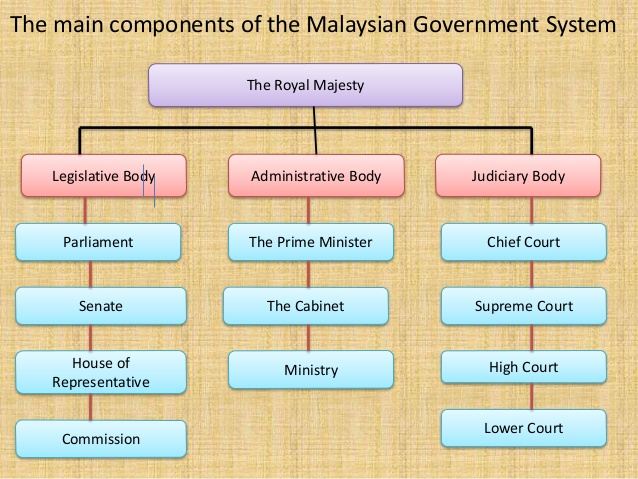
The Federation of Malaya (now Malaysia) was formed in 1957 upon gaining independence from the United Kingdom. Malaysia is a constitutional monarchy with an elected monarch as the head of state. The official term for the Malaysian monarch is Yang di-Pertuan Agong, or “He who was made Lord.” The monarch is elected to a 5-year term by the rulers of the 9 Malay states (of 13) that have hereditary rulers. 
Aside from the monarch, there are 3 branches of government (legislative, judiciary, and executive) that function similarly to that of the United Kingdom. A Prime Minister is the head of the Executive Branch and is directly appointed by the Yang di-Pertuan Agong. Individual states have their own respective legislative and executive authorities.

Malaysian Agricultural Policy

The involvement of British colonizers beginning in the early 1900s had a long-lasting impact on the Malaysian agricultural sector. Prior to 1957, all decisions regarding agricultural development were made to benefit British interests in exporting raw commodities, especially rubber, palm oil, and cocoa during WWI and WWII. This perpetuated the development of infrastructure in Malaysia while defining the racial identification of workers in respective commodities (Malay in subsistence paddy farms, Indian in commercial plantations, and Chinese in vegetable production).
Post-independence agricultural policies varied greatly due to Malaysia’s newfound position as a global leader in rubber and palm oil production. From 1957-1984, nearly 250,000 hectares of forests were cleared so palm and rubber trees could be planted. Although these actions created jobs, it created a further divide in small farms and large corporate plantations. From 1984-1992, agricultural policy made strides to eradicate poverty of small farmers and increase the value of agriculture products for exports. The 1990s and early 2000s continued to be a time of revelation for the Malaysian government as the agriculture sector’s GDP began to steadily decline and manufacturing soared. The current policy (developed in 2010) aims to diversify the agriculture sector to include agrotourism, aquaculture, small scale livestock, and forestry products in an effort to revitalize the agriculture sector and recruit new individuals into agriculture research & development.

Technical & Vocational Education Training (TVET) in Malaysia


When Malaysia gained independence from the United Kingdom in 1957, the education system was lacking any type of organization or consistency across the 13 Malay states. Early attempts in reorganizing the education system aimed to focus on providing 6 years of free education to all students, focusing on skill attainment necessary for economic development, and establishing teacher training colleges. It should be noted that agriculture was mentioned and considered in numerous reports when addressing technical education needs. (Note: TVET is the equivalent of Career & Technical Education in the United States.)
The most notable education reform impacted TVET occurred in 2011. Prior to this reform, TVET was implemented in 2 methods: (1) an elective course in secondary academic schools and (2) technical secondary schools. This is a similar method to what we are accustomed to in the United States.
The reform will bring the establishment of Vocational Colleges (VCs) by transforming the current technical secondary schools into these desired VCs for upper-secondary enrollment. The VCs will offer 2 tracks: (1) certificate programs at the upper secondary level and (2) diplomas at the secondary level. Additionally, TVET electives in academic secondary schools will be discontinued due to the limitations in providing “practical skills” to students who intend to enter the labor market after graduation.

Malaysian Agriculture Organizations

As agriculture educators and students in the United States, we are encouraged to become involved in numerous agricultural groups and organizations within our communities to develop an understanding of our local agricultural industry. Such groups include Farm Bureau, Grange, commodity groups, and breed associations. What are the key organizations that are providing support to Agriculture Education programs in Malaysia?
The #AgEd2Malaysia team compiled a directory of 10 relevant Malaysian Agriculture Organizations that can be viewed at the link below. Examples of groups include the Ministry of Agriculture and Agro-Based Industry (MOA), Farmers Organization Authority Malaysia (FOA), and the Malaysia Palm Oil Board (MPOB).


Follow the #AgEd2Malaysia Team's live adventure on Facebook, Twitter, and Instagram beginning July 6 and ending August 3, 2018

Tuesday, October 17, 2017

Why #AgEd2Malaysia?


"Why do you go away? So that you can come back. So that you can see the place you came from with new eyes and extra colors. And the people there see you differently, too. Coming back to where you started is not the same as never leaving." ~Terry Pratchett